

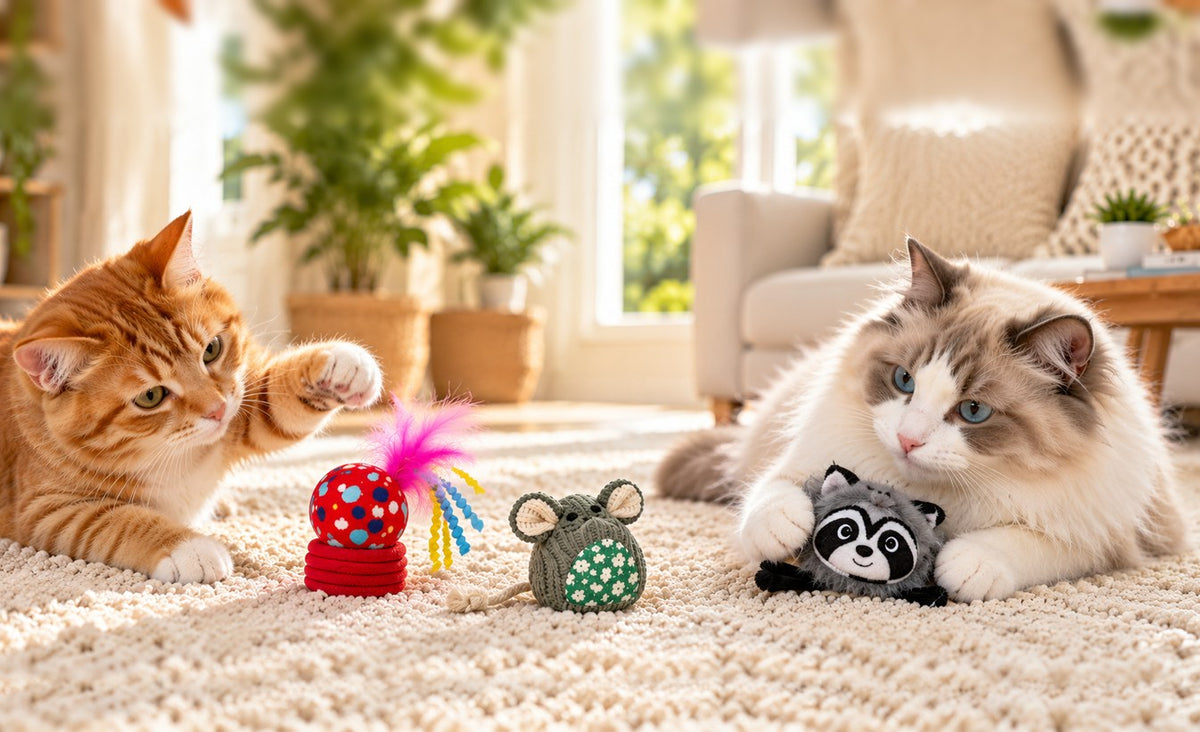
Every cat, from the laziest lap cat to the zoomiest kitten, is a hunter at heart. Play is how they act on that instinct, and a cat who plays regularly is usually a happier, calmer cat at home.
Play like prey
Cats chase things that move like prey: darting, hiding, then darting again. Instead of waving a toy in your cat's face, drag it away from them, tuck it behind a chair, then let it "escape" across the floor.
The hunt cycle
A satisfying play session follows the natural hunting pattern:
- Stalk: let your cat watch and plan.
- Chase: keep the toy moving.
- Catch: let them win! A cat that never catches anything gives up.
- Eat: end with a small treat or a meal. Many cats then groom and nap, just like after a real hunt.
Two short sessions a day, around 10–15 minutes each, work well for most cats.
About catnip
Catnip makes many cats playful, rolling and silly for a few minutes. Not every cat responds to it, and young kittens often don't react at all. Both are completely normal.
Safety first
- Put teaser toys away after play. Strings, feathers and elastic can be swallowed if left out.
- Check small toys regularly for loose pieces.
- Rotate toys weekly to keep things new and exciting.
Our picks
Try the Catnip Mouse with Rope Tail for solo batting, the Raccoon Shaker for a little extra chaos, or a teaser for interactive hunts. Shop all WAFA cat toys →


Leave a comment
This site is protected by hCaptcha and the hCaptcha Privacy Policy and Terms of Service apply.